


Products

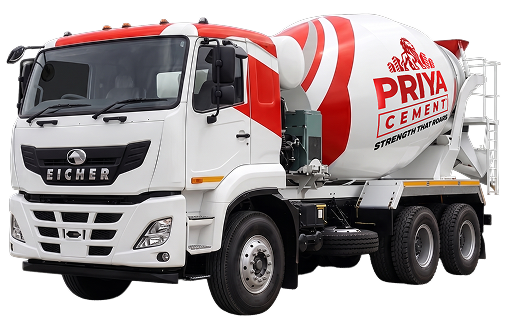
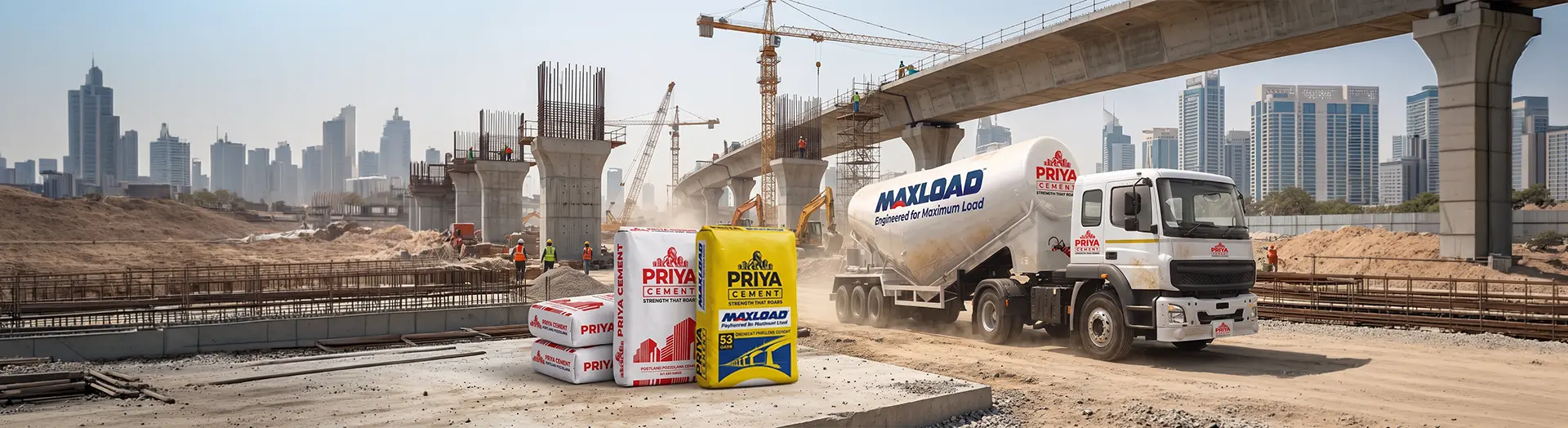
Rain Cements Limited (RCL) manufactures two types of Priya Cement: Ordinary Portland Cement (OPC) and Portland Pozzolana Cement (PPC). Both types of cement are generally suited for all type of construction. Following rigid quality procedures and continuous monitoring of its manufacturing processes, we ensure that only quality products reach our customers. Here’s a look at the Priya Cement production plants and products.

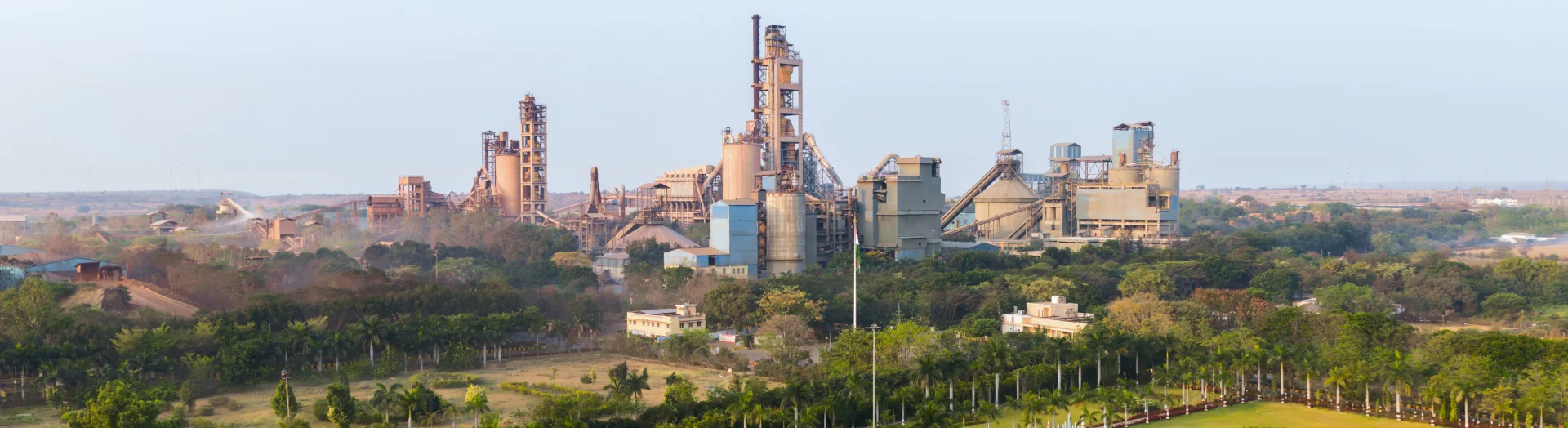
Priya Cement is manufactured at two integrated cement plants: one in Andhra Pradesh and one in Telangana, as well as one cement packing unit in Karnataka. The Unit I integrated cement plant in Telangana is located in the state’s Suryapet District and has a production capacity of 1.0 MT per year of clinker and 1.5 MT per year of cement.  The Unit II integrated cement plant is in the Kurnool District of Andhra Pradesh, has a production capacity of 1.94 MT per year of clinker and 2.77 MT per year of cement.

Products Manufactured at the Unit I, Ramapuram, Suryapet District:

  • Maxload (OPC - 53 Grade)
  • PPC (Fly Ash Based)

Products Manufactured at the Unit II, Sreepuram, Kurnool District:

  • Maxload (OPC - 53 Grade)
  • PPC (Fly Ash Based)

RCL manufactures two types of Priya Cement: Ordinary Portland Cement (OPC) and Portland Pozzolana Cement (PPC).


Maxload (OPC - 53 Grade)

Maxload (OPC - 53 Grade) is a high-strength cement primarily used in construction applications where superior strength is essential. As per IS 269, this cement achieves a compressive strength of greater than 53 MPa after a 28-day curing period. It is produced by grinding clinker with gypsum, and may include small quantities of performance-enhancing additives.

Key Strength Parameters (as per BIS IS 269)

Compressive Strength Requirements: 3 days: ≥ 27 MPa | 7 days: ≥ 37 MPa | 28 days: ≥ 53 MPa

Advantages

  • Rapid strength gain reduces construction time and allows earlier formwork stripping
  • Ideal for time-bound projects with stringent deadlines
  • High early strength development enhances construction efficiency
  • Excellent performance in structural applications requiring high load-bearing capacity

Limitations

  • Not recommended for brickwork and plastering where low heat of hydration is required
  • In mass concreting works, the high heat of hydration may cause thermal cracking

Application Areas

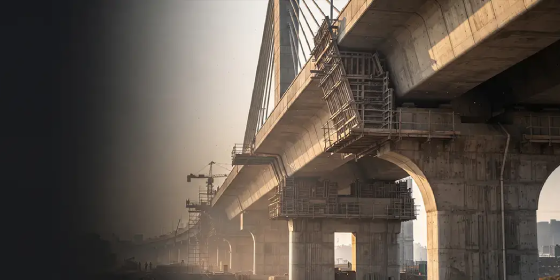
Maxload (OPC - 53 Grade) is suitable for high-rise buildings, industrial structures, bridges and flyovers, RCC structures requiring high strength, and pre-stressed concrete structures..

Technical Specifications

Maxload (OPC - 53 Grade) is widely used in infrastructure, industrial, and high-rise construction projects and is trusted by construction professionals across India.

Parameter IS 269:2015 Requirement Test Results
Physical Requirements
Fineness - Specific Surface (m²/kg) Min. 225 288
Initial Setting Time (minutes) Min. 30 140
Final Setting Time (minutes) Max. 600 220
Le Chatelier Expansion (mm) Max. 10.0 1.0
Autoclave Expansion (%) Max. 0.8 0.067
Compressive Strength (MPa)
3 Days (72 ± 1 hours) Min. 27 36
7 Days (168 ± 2 hours) Min. 37 45
28 Days (672 ± 4 hours) Min. 53 66
Chemical Requirements
Loss on Ignition (%) Max. 4.0 2.04
Insoluble Residue (%) Max. 5.0 4.04
Sulphuric Anhydride (%) Max. 3.5 1.77

Portland Pozzolana Cement (PPC)

GreenPro Certified | Sustainable | Low-Carbon | Durable

Portland Pozzolana Cement (PPC) is a blended cement widely used in construction for its exceptional durability and eco-friendly nature. PPC is produced by inter-grinding Portland clinker, gypsum, and pozzolanic materials. Our PPC incorporates fly ash sourced from coal-fired thermal power plants, transforming an industrial by-product into a valuable construction material.

GreenPro Certification

Our PPC has been certified GreenPro by the Confederation of Indian Industry (CII) – Sohrabji Godrej Green Business Centre (GBC). This prestigious certification validates that the product is environmentally responsible throughout its entire life cycle—from raw material extraction to end-of-life disposal. The GreenPro label serves as a mark of sustainable, low-carbon, and durable construction material, demonstrating our commitment to environmental stewardship.

Key Characteristics

Composition:

  • 65–80% Portland clinker
  • 15 - 35% fly ash (pozzolanic material)
  • 3–5% gypsum

Colour: Slightly paler than Ordinary Portland Cement (OPC) due to the fly ash content.

Setting Time: Slightly longer than OPC, which improves workability during construction.

Advantages of PPC

  • Enhanced Durability: Superior resistance to chlorides and sulphates ensures long-lasting structures.
  • Low Heat of Hydration: Reduces the risk of thermal cracking, making it ideal for mass concrete applications.
  • Improved Workability: Longer setting time allows for better handling and finishing, especially in hot weather conditions.
  • Environmentally Friendly: Utilises fly ash from thermal power plants, reducing environmental impact, conserving natural resources, and lowering the carbon footprint.
  • Cost-Effective: More economical compared to OPC while delivering comparable or superior performance.
  • Long-Term Strength Development: Continues to gain strength beyond 28 days, resulting in stronger structures over time.
  • Reduced Permeability: Lower porosity enhances durability and protects reinforcement from corrosion.

Application Areas

PPC is ideally suited for marine structures, deep foundations, water-retaining structures, mass concrete works, residential and commercial buildings, masonry and plastering, and sewage and water treatment plant structures.

Technical Specifications

Our PPC is manufactured with consistent quality and is widely trusted across the construction industry.

Parameter IS 1489 (Part 1):2015 Test Results
Physical Requirements
Fineness - Specific Surface (m²/kg) Min. 300 345
Initial Setting Time (minutes) Min. 30 145
Final Setting Time (minutes) Max. 600 215
Le Chatelier Expansion (mm) Max. 10.0 1.0
Autoclave Expansion (%) Max. 0.8 0.04
Compressive Strength (MPa)
3 Days (72 ± 1 hours) Min. 16 24
7 Days (168 ± 2 hours) Min. 22 34
28 Days (672 ± 4 hours) Min. 33 53
Drying Shrinkage (%) Max. 0.15 0.06
Chemical Requirements
Loss on Ignition (%) Max. 5.0 2.00
Insoluble Residue (%) As per IS formula* 30.36
Magnesia (%) Max. 6.0 1.11
Chloride Content (%) Max. 0.10 0.01